Respecting the Law
One of the most important responsibilities of all residents of the UK is to know and obey the law. Obeying the law is a fundamental requirement for all those living in the UK. The law protects individuals and their property, and provides a framework for resolving disputes.
Criminal Law and Civil Law
There are two main categories of law in the UK:
- Criminal law relates to crimes, which are offences committed against the state or against individuals that are considered harmful to society. Examples include theft, assault, murder, drug dealing and fraud. Criminal cases are usually brought by the Crown Prosecution Service (CPS) in England and Wales, the Crown Office and Procurator Fiscal Service in Scotland, and the Public Prosecution Service in Northern Ireland.
- Civil law is used to settle disputes between individuals or groups. Examples include cases about housing, employment contracts, consumer rights and family matters such as divorce. Civil cases are usually brought by the individuals or organisations involved.
The Police
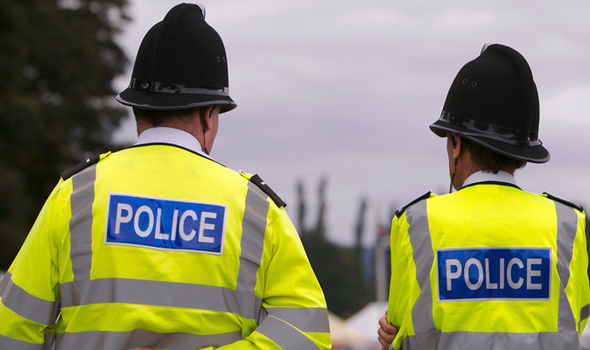
The police service is organised locally -- each area has its own police force headed by a Chief Constable (in England, Wales and Scotland) or the Chief Superintendent in Northern Ireland (the police service there is called the Police Service of Northern Ireland, or PSNI).
The police have a duty to protect everyone equally, regardless of their background. The home country police forces are funded by a combination of central and local government. The overall role of the police includes:
- Protecting life and property
- Preventing and detecting crime
- Keeping the peace
- Responding to emergencies
In November 2012, Police and Crime Commissioners (PCCs) were introduced in England and Wales outside London. PCCs are elected by the public to hold the police to account.
If you are arrested and taken to a police station, you have the right to:
- Have someone informed of your arrest
- Consult with a solicitor (free of charge)
- Have an interpreter if you do not speak English well
The Courts System
The court system differs in each part of the UK.
England and Wales:
- Magistrates' Courts deal with minor criminal offences. Cases are usually heard by Justices of the Peace (JPs), also known as magistrates, who are unpaid members of the community (not usually qualified lawyers). There are also paid District Judges who sit alone.
- Crown Court deals with serious criminal cases. Cases are heard by a judge and a jury. The jury is made up of 12 members of the public chosen at random from the electoral register. The jury decides whether the defendant is guilty or not guilty, and the judge decides the sentence.
- County Court deals with civil disputes such as personal injury claims, family matters (such as divorce), and disputes about contracts or property.
- High Court deals with the most serious and important civil cases. It also hears appeals from lower courts.
- Court of Appeal hears appeals from the Crown Court and the High Court.
Scotland:
- Justice of the Peace Courts deal with minor criminal offences.
- Sheriff Courts deal with most other criminal cases and most civil cases. In criminal cases, a sheriff may sit with a jury of 15 members.
- The High Court of Justiciary is Scotland's supreme criminal court.
- The Court of Session is Scotland's supreme civil court and sits in Edinburgh.
Northern Ireland:
- The court system in Northern Ireland is broadly similar to that of England and Wales, with Magistrates' Courts, Crown Court, County Court and the High Court.
The Supreme Court of the United Kingdom is the final court of appeal for all civil cases in the UK and for criminal cases in England, Wales and Northern Ireland. It replaced the judicial functions of the House of Lords in 2009.
Jury Service
Every person on the electoral register who is aged 18 to 75 may be called to serve on a jury. It is a civic duty and you can be fined if you do not attend when called. You may be excused or deferred in certain circumstances. Serving on a jury is one of the most important ways citizens can participate in the justice system.
Legal Aid
People who cannot afford legal representation may qualify for legal aid, which provides free or subsidised legal advice and representation. Legal aid is administered differently in each part of the UK:
- In England and Wales, by the Legal Aid Agency
- In Scotland, by the Scottish Legal Aid Board
- In Northern Ireland, by the Legal Services Agency Northern Ireland
Youth Courts
Young people under 18 who are accused of crimes are dealt with in Youth Courts. These are a specialised form of Magistrates' Court with specially trained magistrates. Parents or guardians are required to attend.
Human Rights
The UK was one of the first countries to sign the European Convention on Human Rights and Fundamental Freedoms. The rights under this convention were made part of UK law through the Human Rights Act 1998. Key rights include:
- Right to life
- Prohibition of torture
- Right to a fair trial
- Right to respect for private and family life
- Freedom of thought, conscience and religion
- Freedom of expression
- Right to free elections
Check that you understand
- The difference between criminal law and civil law
- The role of the police and your rights if arrested
- How the courts system works in England and Wales, Scotland and Northern Ireland
- What jury service involves and who can be called to serve
- What legal aid is and how to access it
- Key human rights protected under UK law
*This is a study guide for the Life in the UK test. Content is based on the official handbook topics.*
Chapters 2–5 translations require a free account
Chapter 1 translations are available to everyone. Sign up to unlock all chapters.
Sign up freeTest your knowledge of Chapter 5
Practice Chapter 5 (261 questions)The study guide content on this site is based on information from Life in the United Kingdom: A Guide for New Residents, 3rd edition, published by the Home Office. © Crown copyright. This is an independent study tool and is not affiliated with or endorsed by the Home Office or the official test provider. For the official handbook, visit officiallifeintheuk.co.uk.