Respecting the Law
One of the most important responsibilities of all residents of the UK is to know and obey the law. Obeying the law is a fundamental requirement for all those living in the UK. The law protects individuals and their property, and provides a framework for resolving disputes.
Britain is proud of being a welcoming country, but all residents, regardless of their background, are expected to comply with the law and to understand that some things which may be allowed in other legal systems are not acceptable in the UK. Those who do not respect the law should not expect to be allowed to become permanent residents in the UK. The law is relevant to all areas of life in the UK. You should make sure that you are aware of the laws which affect your everyday life, including both your personal and business affairs. Every person in the UK receives equal treatment under the law. This means that the law applies in the same way to everyone, no matter who they are or where they are from.
Criminal Law and Civil Law
There are two main categories of law in the UK:
- Criminal law relates to crimes, which are usually investigated by the police or another authority such as a council, and which are punished by the courts. Examples include theft, assault, murder, drug dealing and fraud. Criminal cases are usually brought by the Crown Prosecution Service (CPS) in England and Wales, the Crown Office and Procurator Fiscal Service in Scotland, and the Public Prosecution Service in Northern Ireland.
- Civil law is used to settle disputes between individuals or groups. Examples include cases about housing, employment contracts, consumer rights and family matters such as divorce. Civil cases are usually brought by the individuals or organisations involved.
Examples of civil laws are:
- Housing law: this includes disputes between landlords and tenants over issues such as repairs and eviction.
- Consumer rights: an example of this is a dispute about faulty goods or services.
- Employment law: these cases include disputes over wages and cases of unfair dismissal or discrimination in the workplace.
- Debt: people might be taken to court if they owe money to someone.
Examples of criminal laws are:
- Carrying a weapon: it is a criminal offence to carry a weapon of any kind, even if it is for self-defence. This includes a gun, a knife or anything that is made or adapted to cause injury.
- Drugs: selling or buying drugs such as heroin, cocaine, ecstasy and cannabis is illegal in the UK.
- Racial crime: it is a criminal offence to cause harassment, alarm or distress to someone because of their religion or ethnic origin.
- Selling tobacco: it is illegal to sell tobacco products (for example, cigarettes, cigars, roll-up tobacco) to anyone under the age of 18.
- Smoking in public places: it is against the law to smoke tobacco products in nearly every enclosed public place in the UK. There are signs displayed to tell you where you cannot smoke.
- Buying alcohol: it is a criminal offence to sell alcohol to anyone who is under 18 or to buy alcohol for people who are under the age of 18. (There is one exception: people aged 16 or over can drink alcohol with a meal in a hotel or restaurant.)
- Drinking in public: some places have alcohol-free zones where you cannot drink in public. The police can also confiscate alcohol or move young people on from public places. You can be fined or arrested.
The Police
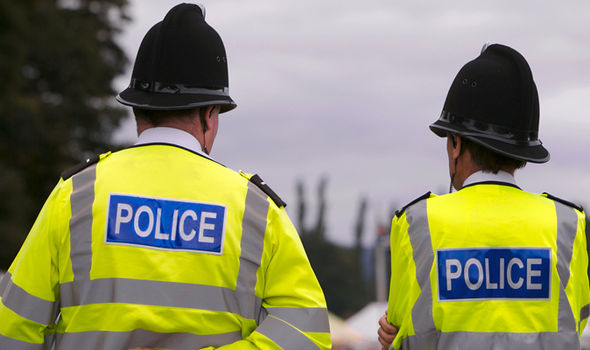
The police service is organised locally -- each area has its own police force headed by a Chief Constable (in Northern Ireland the police service is called the Police Service of Northern Ireland, or PSNI).
The police have a duty to protect everyone equally, regardless of their background. The home country police forces are funded by a combination of central and local government. The overall role of the police includes:
- Protecting life and property
- Preventing and detecting crime
- Keeping the peace
- Responding to emergencies
In November 2012, Police and Crime Commissioners (PCCs) were introduced in England and Wales outside London. PCCs are elected by the public to hold the police to account.
The police are independent of the government. Police and Crime Commissioners are directly elected individuals who are responsible for the delivery of an efficient and effective police force that reflects the needs of their local communities. PCCs set local police priorities and the local policing budget. They also appoint the Chief Constable. Police officers are supported by police community support officers (PCSOs). PCSOs have different roles according to the area but usually patrol the streets, work with the public, and support police officers at crime scenes and major events.
Police officers must themselves obey the law. They must not misuse their authority, make a false statement, be rude or abusive, or commit racial discrimination. If police officers are corrupt or misuse their authority they are severely punished.
All people in the UK are expected to help the police prevent and detect crimes whenever they can. If you are arrested and taken to a police station, a police officer will tell you the reason for your arrest and you will be able to seek legal advice.
If you are arrested and taken to a police station, you have the right to:
- Have someone informed of your arrest
- Consult with a solicitor (free of charge)
- Have an interpreter if you do not speak English well
If something goes wrong, the police complaints system tries to put it right. Anyone can make a complaint about the police by going to a police station or writing to the Chief Constable of the police force involved. Complaints can also be made to an independent body: the Independent Office for Police Conduct in England and Wales, the Police Complaints Commissioner for Scotland or the Police Ombudsman for Northern Ireland. (Changed since the handbook, 10 November 2026: in 2013 the Police Investigations and Review Commissioner replaced the Police Complaints Commissioner for Scotland.)
Terrorism and Extremism
The UK faces a range of terrorist threats. The most serious of these is from Al Qa'ida, its affiliates and like-minded organisations. The UK also faces threats from other kinds of terrorism, such as Northern Ireland-related terrorism.
All terrorist groups try to radicalise and recruit people to their cause. How, where and to what extent they try to do so will vary. Evidence shows that these groups attract very low levels of public support, but people who want to make their home in the UK should be aware of this threat. It is important that all citizens feel safe. This includes feeling safe from all kinds of extremism (vocal or active opposition to fundamental British values), including religious extremism and far-right extremism.
If you think someone is trying to persuade you to join an extremist or terrorist cause, you should notify your local police force.
The Courts System
Judges (who are together called 'the judiciary') are responsible for interpreting the law and ensuring that trials are conducted fairly. The government cannot interfere with this.
Sometimes the actions of the government are claimed to be illegal. If the judges agree, then the government must either change its policies or ask Parliament to change the law. If judges find that a public body is not respecting someone's legal rights, they can order that body to change its practices and/or pay compensation. Judges also make decisions in disputes between members of the public or organisations. These might be about contracts, property or employment rights or after an accident.
The court system differs in each part of the UK.
England and Wales:
- Magistrates' Courts deal with most minor criminal cases. Cases are usually heard by Justices of the Peace (JPs), also known as magistrates, who are members of the local community. They usually work unpaid and do not need legal qualifications. They receive training to do the job and are supported by a legal adviser. Magistrates decide the verdict in each case that comes before them and, if the person is found guilty, the sentence that they are given. There are also paid District Judges who sit alone.
- Crown Court deals with serious criminal cases. Cases are heard by a judge and a jury. The jury is made up of 12 members of the public chosen at random from the local electoral register. The jury decides whether the defendant is guilty or not guilty, and the judge decides the sentence.
- County Courts deal with a wide range of civil disputes. These include people trying to get back money that is owed to them, cases involving personal injury, family matters, breaches of contract, and divorce. (Changed since the handbook, 10 November 2026: since 22 April 2014, divorce and other family cases in England and Wales go to the Family Court.)
- High Court deals with more serious civil cases, for example when a large amount of compensation is being claimed. It also hears appeals from lower courts.
- Court of Appeal hears appeals from the Crown Court and the High Court.
Scotland:
- Justice of the Peace Courts deal with minor criminal offences.
- Sheriff Courts hear serious criminal cases, with either a sheriff or a sheriff with a jury. A jury in Scotland has 15 members. Most civil disputes are also dealt with in the Sheriff Court.
- The most serious criminal cases in Scotland, such as murder, are heard at the High Court with a judge and jury.
- More serious civil cases, for example when a large amount of compensation is being claimed, are dealt with in the Court of Session in Edinburgh.
In Scotland, the handbook says a jury can also return a third verdict, 'not proven'. (Changed since the handbook, 10 November 2026: Scotland abolished the 'not proven' verdict for new trials from 1 January 2026, so guilty and not guilty are now the only verdicts. The test does not ask about 'not proven'.)
Northern Ireland:
- The court system in Northern Ireland is broadly similar to that of England and Wales, with Magistrates' Courts, Crown Court, County Court and the High Court.
- In Northern Ireland, cases in a Magistrates' Court are heard by a District Judge or Deputy District Judge, who is legally qualified and paid.
In England, Wales and Northern Ireland a jury has 12 members.
The Supreme Court of the United Kingdom is the final court of appeal for all civil cases in the UK and for criminal cases in England, Wales and Northern Ireland. It replaced the judicial functions of the House of Lords in 2009.
The small claims procedure is an informal way of helping people to settle minor disputes without spending a lot of time and money using a lawyer. This procedure is used for claims of less than £10,000 in England and Wales and £5,000 in Scotland and Northern Ireland. The hearing is held in front of a judge in an ordinary room, and people from both sides of the dispute sit around a table. Small claims can also be issued online through Money Claims Online (www.moneyclaim.gov.uk).
You can get details about the small claims procedure from your local County Court or Sheriff Court.
Jury Service
Every person on the electoral register who is aged 18 to 70 may be called to serve on a jury. (Changed since the handbook, 10 November 2026: in England and Wales the upper age has been 75 since 2016. The test does not ask about the age range.) It is a civic duty and you can be fined if you do not attend when called. You may be excused or deferred in certain circumstances. Serving on a jury is one of the most important ways citizens can participate in the justice system.
Everyone who is summoned to do jury service must do it unless they are not eligible (for example, because they have a criminal conviction) or they provide a good reason to be excused, such as ill health.
Legal Aid
People who cannot afford legal representation may qualify for legal aid, which provides free or subsidised legal advice and representation. Legal aid is administered differently in each part of the UK:
- In England and Wales, by the Legal Aid Agency
- In Scotland, by the Scottish Legal Aid Board
- In Northern Ireland, by the Legal Services Agency Northern Ireland
Legal Advice
Solicitors are trained lawyers who give advice on legal matters, take action for their clients and represent their clients in court.
There are solicitors' offices throughout the UK. It is important to find out which aspects of law a solicitor specialises in and to check that they have the right experience to help you with your case. Many advertise in local newspapers and in Yellow Pages. (Changed since the handbook, 10 November 2026: the printed Yellow Pages ended in 2019.) The Citizens Advice Bureau (www.citizensadvice.org.uk) can give you names of local solicitors and which areas of law they specialise in. You can also get this information from the Law Society (www.lawsociety.org.uk) in England and Wales, the Law Society of Scotland (www.lawscot.org.uk) or the Law Society of Northern Ireland (www.lawsoc-ni.org). Solicitors' charges are usually based on how much time they spend on a case. It is very important to find out at the start how much a case is likely to cost.
Youth Courts
Young people under 18 who are accused of crimes are dealt with in Youth Courts. These are a specialised form of Magistrates' Court with specially trained magistrates. Parents or guardians are required to attend.
In England, Wales and Northern Ireland, if an accused person is aged 10 to 17, the case is normally heard in a Youth Court in front of up to three specially trained magistrates or a District Judge. The most serious cases will go to the Crown Court. The parents or carers of the young person are expected to attend the hearing. Members of the public are not allowed in Youth Courts, and the name or photographs of the accused young person cannot be published in newspapers or used by the media.
In Scotland a system called the Children's Hearings System is used to deal with children and young people who have committed an offence.
Northern Ireland has a system of youth conferencing to consider how a child should be dealt with when they have committed an offence.
Human Rights
The UK was one of the first countries to sign the European Convention on Human Rights and Fundamental Freedoms. The rights under this convention were made part of UK law through the Human Rights Act 1998. Key rights include:
- Right to life
- Prohibition of torture
- Right to a fair trial
- Right to respect for private and family life
- Freedom of thought, conscience and religion
- Freedom of expression
- Right to free elections
Check that you understand
- The difference between criminal law and civil law
- The role of the police and your rights if arrested
- How the courts system works in England and Wales, Scotland and Northern Ireland
- What jury service involves and who can be called to serve
- What legal aid is and how to access it
- Key human rights protected under UK law
This is a study guide for the Life in the UK test. Content is based on the official handbook topics.
Test your knowledge of Chapter 5
Practice Chapter 5 (565 questions)The study guide content on this site is based on information from Life in the United Kingdom: A Guide for New Residents, 3rd edition, published by the Home Office. © Crown copyright. This is an independent study tool and is not affiliated with or endorsed by the Home Office or the official test provider. For the official handbook, visit officiallifeintheuk.co.uk.