Your Role in the Community
Becoming a British citizen or permanent resident brings with it certain rights and responsibilities, but also opportunities. Everyone has the opportunity to participate in their community. Being a good citizen means contributing to your community and helping to make the UK a better place to live.
Voting
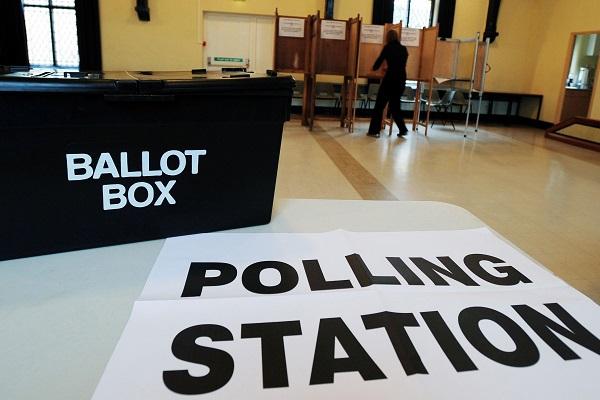
The UK is a parliamentary democracy. The right to vote (also called 'suffrage' or 'the franchise') is one of the most important civic responsibilities. UK citizens and citizens of the Commonwealth and the Irish Republic who are resident in the UK can vote in all public elections. Citizens of EU countries who are resident in the UK can vote in local elections and elections to the devolved administrations. (Changed since the handbook, 10 November 2026: in England, since May 2024, only EU citizens who lived in the UK before 2021, or who come from countries with a voting agreement with the UK, can vote in local elections. The test does not ask about this.)
To vote, you must be:
- 18 years of age or over (16 in Scottish Parliament and local elections in Scotland and Wales)
- On the electoral register -- each person registers themselves, online at www.gov.uk/register-to-vote or through the local council electoral registration office. You normally only need to register once, unless you change your name, address or nationality
There are different types of elections:
- General elections for the UK Parliament at Westminster -- held at least every five years
- Local elections for local councils
- Elections to the devolved parliaments/assemblies in Scotland, Wales and Northern Ireland
- By-elections when a seat becomes vacant between general elections
- European Parliament elections (prior to Brexit)
You can vote in person at a polling station, by post or by proxy (getting someone else to vote on your behalf).
On election day, polling stations are open from 7am to 10pm. At some elections you must show accepted photo ID at the polling station: UK Parliament elections, local elections in England, and Police and Crime Commissioner elections in England and Wales. In Northern Ireland you must show photo ID at all elections.
Political parties welcome new members. Joining one is a way to demonstrate your support for certain views and to get involved in the democratic process. Political parties are particularly busy at election times. Members work hard to persuade people to vote for their candidates -- for instance, by handing out leaflets in the street or by knocking on people's doors and asking for their support. This is called 'canvassing'. You don't have to tell a canvasser how you intend to vote if you don't want to.
Standing for Office
Most citizens of the UK, the Irish Republic or the Commonwealth who are 18 or over can stand for public office. This includes standing as a candidate in local council elections, elections to the devolved parliaments and assemblies, or for the UK Parliament.
There are some exceptions -- you cannot stand for office if you are:
- A member of the armed forces
- A civil servant
- A person found guilty of certain criminal offences
Jury Service
Serving on a jury is an important civic duty. Every person on the electoral register aged between 18 and 70 may be called to serve on a jury. In England, Wales and Northern Ireland, a jury has 12 members. In Scotland, a jury has 15 members. Juries listen to the evidence in a court case and decide whether the defendant is guilty or not guilty. (Changed since the handbook, 10 November 2026: in England and Wales the upper age has been 75 since 2016. The test does not ask about the age range.)
You can be fined if you do not attend jury service when called, although you may be excused or have your service deferred in certain circumstances.
Volunteering
Volunteering and helping your community are an important part of being a good citizen. They enable you to integrate and get to know other people. It helps to make your community a better place if residents support each other. It also helps you to fulfil your duties as a citizen, such as behaving responsibly and helping others.
There are a number of positive ways in which you can support your community and be a good citizen.
If you have children, there are many ways in which you can help at their schools. Parents can often help in classrooms, by supporting activities or listening to children read.
There are thousands of active charities and voluntary organisations in the UK. They work to improve the lives of people, animals and the environment in many different ways. They range from the British branches of international organisations, such as the British Red Cross, to small local charities working in particular areas. They include charities working with older people (such as Age UK), with children (for example, the National Society for the Prevention of Cruelty to Children (NSPCC)), and with the homeless (for example, Crisis and Shelter). There are also medical research charities (for example, Cancer Research UK), environmental charities (including the National Trust and Friends of the Earth) and charities working with animals (such as the People's Dispensary for Sick Animals (PDSA)).
Volunteering is a good way to meet people, learn new skills and improve your English language abilities. It can also help with finding paid employment.
Volunteering is working for good causes without payment. Many people volunteer simply because they want to help other people. Activities you can do as a volunteer include: working with animals, for example caring for animals at a local rescue shelter; youth work, for example volunteering at a youth group; helping improve the environment, for example taking part in a litter pick-up in the local area; working with the homeless, for example in a homelessness shelter; mentoring, for example supporting someone who has just come out of prison; work in health and hospitals, for example working on an information desk in a hospital; and helping older people, for example at a residential care home. You can also volunteer with the police and become a special constable or a lay (non-police) representative, and you can apply to become a magistrate.
There are opportunities to volunteer with a wide range of local service providers, including local hospitals and youth projects. Services often want to involve local people in decisions about the way in which they work. Universities, housing associations, museums and arts councils may advertise for people to serve as volunteers in their governing bodies.
School Governors and School Boards
School governors, or members of the school board in Scotland, are people from the local community who wish to make a positive contribution to children's education. (Changed since the handbook, 10 November 2026: in Scotland, Parent Councils replaced school boards in 2007.)
They must be aged 18 or over at the date of their election or appointment. There is no upper age limit. Governors have an important part to play in raising school standards. They have three key roles: setting the strategic direction of the school, ensuring accountability, and monitoring and evaluating school performance. Many schools organise events to raise money for extra equipment or out-of-school activities. Activities might include book sales, toy sales or bringing food to sell. Sometimes events are organised by parent-teacher associations (PTAs). Volunteering to help with their events or joining the association is a way of doing something good for the school and also making new friends in your local community.
You can contact your local school to ask if they need a new governor. In England, parents and other community groups can apply to open a free school in their local area.
Neighbourhood Watch
Neighbourhood Watch schemes are a partnership between local communities and the police. Members look out for suspicious activity and report it to the police. Being part of Neighbourhood Watch helps reduce crime and makes communities safer. Schemes exist across the UK and are coordinated locally.
Supporting the Local Community
There are many other ways to participate in and support your local community:
- Attending local council meetings -- these are open to the public and are a way to find out about local issues and have your say
- Joining a residents' association or community group
- Helping to organise community events such as fetes, street parties and festivals
- Keeping your neighbourhood clean and tidy
- Getting to know your neighbours and looking out for one another
When you move into a new house or apartment, introduce yourself to the people who live near you. Getting to know your neighbours can help you to become part of the community and make friends. Your neighbours are also a good source of help -- for example, they may be willing to feed your pets if you are away, or offer advice on local shops and services.
You can help prevent any problems and conflicts with your neighbours by respecting their privacy and limiting how much noise you make. Also try to keep your garden tidy, and only put your refuse bags and bins on the street or in communal areas if they are due to be collected.
A good way to support your local community is to shop for products locally where you can. This will help businesses and farmers in your area and in Britain. It will also reduce your carbon footprint, because the products you buy will not have had to travel as far.
Some pressure groups campaign on particular topics, such as human rights (for example, Liberty).
Blood and Organ Donation
Donating blood and registering as an organ donor are important ways to help others. The UK has a system for blood donation run by the NHS Blood and Transplant service (in England and North Wales), the Scottish National Blood Transfusion Service, the Welsh Blood Service and the Northern Ireland Blood Transfusion Service.
Donated blood is used by hospitals to help people with a wide range of injuries and illnesses. Giving blood only takes about an hour to do. You can register to give blood at www.blood.co.uk in England and North Wales, and at www.scotblood.co.uk in Scotland.
You can register as an organ donor through the NHS Organ Donor Register. This means that your organs can be used to save the lives of others after your death. In England and Wales, an opt-out system (also known as 'deemed consent') means that all adults are considered potential organ donors unless they have opted out. Scotland and Northern Ireland also have similar systems.
Many people in the UK are waiting for organ transplants. If you register to be an organ donor, it can make it easier for your family to decide whether to donate your organs when you die. You can register to be an organ donor at www.organdonation.nhs.uk. Living people can also donate a kidney.
Respecting Your Community
Although Britain is one of the world's most diverse societies, there is a set of shared values and responsibilities that everyone can agree with. These values and responsibilities include:
- To obey and respect the law
- To be aware of the rights of others and respect those rights
- To treat others with fairness
- To behave responsibly
- To help and protect your family
- To respect and preserve the environment
- To treat everyone equally, regardless of sex, race, religion, age, disability, class or sexual orientation
- To work to provide for yourself and your family
- To help others
- To vote in local and national government elections
- To dispose of rubbish properly and recycle where possible
- To keep noise to a reasonable level, especially at night
Taking on these values and responsibilities will make it easier for you to become a full and active citizen.
It is important to recycle as much of your waste as you can. Using recycled materials to make new products uses less energy and means that we do not need to extract more raw materials from the earth. It also means that less rubbish is created, so the amount being put into landfill is reduced. Walking and using public transport to get around when you can is also a good way to protect the environment. It means that you create less pollution than when you use a car.
Check that you understand
- Who is eligible to vote and how to register
- What jury service involves and your obligation to attend
- The different ways you can volunteer in your community
- What Neighbourhood Watch schemes do
- How to register as a blood or organ donor
- Your responsibilities as a member of the community
This is a study guide for the Life in the UK test. Content is based on the official handbook topics.
Test your knowledge of Chapter 5
Practice Chapter 5 (565 questions)The study guide content on this site is based on information from Life in the United Kingdom: A Guide for New Residents, 3rd edition, published by the Home Office. © Crown copyright. This is an independent study tool and is not affiliated with or endorsed by the Home Office or the official test provider. For the official handbook, visit officiallifeintheuk.co.uk.